How I Kept My Cool During a Career Gap — And Grew My Money Anyway
Ever had that panic attack when your income stops but bills don’t? I did — after an unexpected career break left me staring at empty paychecks. But instead of freezing up, I used it to rebuild my investment mindset from the ground up. No magic tricks, just real choices that protected my future. This is how I shifted from fear to focus — and why that gap became one of my smartest financial chapters.
The Moment Everything Stopped
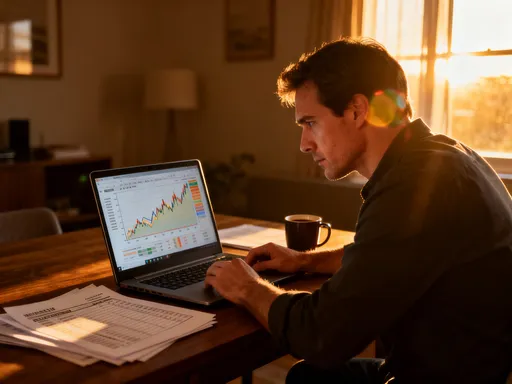
It wasn’t a layoff. It wasn’t a resignation. It was a pause — sudden, silent, and completely unplanned. One day, I was managing projects, responding to emails, planning my next career move. The next, I was sitting at my kitchen table, staring at a calendar with no meetings, no deadlines, and no paycheck on the horizon. The silence was overwhelming. Not the absence of noise, but the absence of purpose, of structure, of financial certainty. I had savings, yes, but not enough to ignore the growing weight of uncertainty. Each month that passed without income felt like a step deeper into unknown territory.
My initial reaction was classic: emotional whiplash. First came panic spending — small comforts that felt like control, like ordering takeout more often or buying clothes online just to feel some sense of agency. Then, guilt set in. I tightened every belt imaginable. I canceled subscriptions, stopped going out, and started tracking every dollar like a detective hunting clues. But even that extreme frugality didn’t calm the anxiety. In fact, it made it worse, because I was still reacting — not acting with intention. I realized I wasn’t managing my money; I was being managed by my fear.
That’s when the real shift began. Instead of asking, “How do I survive this?” I started asking, “What can I learn from this?” I had always thought of financial stability as a function of income. If I earned, I was safe. If I stopped earning, I was in danger. But that mindset had left me unprepared for life’s unpredictability. The truth is, income can stop for many reasons — health issues, caregiving responsibilities, industry shifts, or simply burnout. None of those are moral failures. They are human realities. And if my financial strategy couldn’t withstand a pause, it wasn’t a strategy at all — it was a house of cards.
So I began to reframe the gap not as a failure, but as forced financial clarity. With no new money coming in, I had to examine where every dollar had gone, where it should go, and what I truly valued. This wasn’t just about budgeting; it was about rebuilding my relationship with money. I started journaling about my financial decisions, not just tracking them. I wrote about the emotions behind each purchase, the stories I told myself about scarcity and worth. That practice opened my eyes to patterns I’d ignored for years — like how I used spending to soothe stress or how I avoided investing because it felt too risky, not because it was.
Why Investment Mindset Matters More Than Money
When your income disappears, the idea of investing can feel absurd. How can you think about growing money when you’re trying not to run out of it? For months, I believed investing was something you did when you were stable, when you had extra, when the storm had passed. But what I eventually learned changed everything: your investment mindset isn’t a luxury for the financially secure — it’s a necessity for anyone who wants to become secure.
Investing, at its core, is not about picking stocks or timing the market. It’s about making decisions today that protect and expand your future options. It’s about choosing long-term stability over short-term relief. And that kind of thinking doesn’t require a large sum of money — it requires a clear mind. I began to see that my biggest financial risk wasn’t the lack of income; it was the lack of perspective. Without a disciplined mindset, even a windfall could vanish quickly through impulsive choices or emotional reactions.
I started small. Instead of focusing on returns, I focused on behavior. I asked myself: Am I avoiding risk because it’s truly dangerous, or because it feels uncomfortable? Am I holding onto cash because it’s safe, or because I’m afraid of making a mistake? These questions helped me separate fear from strategy. I realized that not investing was itself a financial decision — and often, a costly one. Inflation erodes cash over time. Holding everything in a checking account might feel safe, but it’s silently reducing your purchasing power.
So I shifted my thinking. I stopped seeing investing as something I would do “someday” and started seeing it as a practice I could cultivate now — even with limited funds. I read about dollar-cost averaging, the power of compounding, and the importance of diversification. I didn’t need to become an expert overnight, but I needed to become intentional. That mindset shift — from scarcity to stewardship — became the foundation of my recovery. It allowed me to stop seeing money as a source of anxiety and start seeing it as a tool I could learn to use wisely.
Protecting What You Have — Risk Control First
Before I could think about growing my money, I had to stop the bleeding. My first priority wasn’t returns — it was resilience. I needed to make sure I wouldn’t be forced into bad decisions later because I ran out of options now. So I conducted a full financial audit. I listed every expense, ranked them by necessity, and identified where I had flexibility. I also reviewed my debt — not just the amounts, but the interest rates and payment terms. I discovered I was paying high interest on a credit card balance I’d been rolling over for years, which was silently draining my resources.
I made three immediate changes. First, I built a leaner budget focused on essentials: housing, utilities, groceries, and insurance. Everything else was deferred or eliminated. Second, I created a timeline for paying down high-interest debt, using even small extra payments to reduce the principal. Third, I established a clear emergency fund target — three months of essential expenses — and committed to rebuilding it before considering any investments. This wasn’t about deprivation; it was about creating breathing room.
Risk control also meant protecting my mental energy. I realized that financial stress wasn’t just about money — it was about decision fatigue. Every day, I faced small choices: Should I buy the cheaper groceries? Should I delay a bill? Each one chipped away at my focus. To reduce that load, I automated what I could. I set up automatic transfers to my debt repayment and savings, so I wouldn’t have to decide each month. I used apps to track spending in real time, which reduced the anxiety of not knowing where my money was going.
Most importantly, I adopted one core rule: never make a financial decision in panic mode. If a choice felt urgent and emotional, I waited 48 hours. In nearly every case, the urgency faded, and I made a calmer, more rational choice. This rule alone prevented me from selling investments at a loss during a market dip and from taking on high-cost loans out of desperation. Risk control isn’t about avoiding all danger — it’s about managing exposure so you can stay in the game long enough to win.
Earning While Paused — The Side Hustle Reality Check
I knew I couldn’t rely solely on savings. I needed some form of income, even if it wasn’t my full-time salary. So I explored side opportunities. I started with freelance work in my field — writing reports, doing project consultations, offering training sessions. Some gigs paid well and fit my schedule. Others took more time than they were worth. I quickly learned that not all income is created equal. Some paid in cash but drained my energy. Others paid less but gave me skills or connections that had long-term value.
I also tried reselling — buying discounted items and selling them online. At first, it seemed promising. But the profits were small, the competition was fierce, and the time investment was high. After a few months, I realized I was trading hours for minimal returns. It wasn’t sustainable. Online tutoring was different. I enjoyed teaching, and the platform handled payments and scheduling. The income wasn’t huge, but it was steady, and it reminded me that my knowledge had value — even outside a traditional job.
What surprised me most was how these small earnings changed my mindset. Even $200 a month felt like progress. It wasn’t about replacing my salary — it was about breaking the feeling of financial helplessness. I started using that income strategically. Instead of spending it all, I allocated a portion to micro-investments — small, regular contributions to a low-cost index fund. It was symbolic at first, but over time, it built momentum. I wasn’t just surviving; I was slowly rebuilding my financial activity.
The real lesson was about income resilience. A single source of income is fragile. But even a few small streams can create stability. I didn’t become a side hustle millionaire — and I wasn’t trying to. I was learning to generate value in different ways, on my own terms. That flexibility became a form of financial strength. It taught me that earning isn’t just about a job title — it’s about solving problems, sharing knowledge, and staying engaged with the economy, even during a pause.
Starting Small — My First Real Investment Move
After months of preparation, I made my first intentional investment. It wasn’t a risky startup stock or a trendy cryptocurrency. It was a simple, low-cost, diversified index fund — the kind financial advisors recommend for long-term growth. I didn’t have thousands to invest. I started with $100. But that small amount represented a huge psychological shift. It meant I was no longer just protecting my money — I was putting it to work.
The decision wasn’t easy. I spent weeks researching. I compared fees, historical performance, and fund structures. I read prospectuses and watched educational videos. What finally gave me confidence wasn’t the data — it was the simplicity. I chose a fund that tracked a broad market index because it didn’t require me to pick winners. It gave me exposure to hundreds of companies with one transaction. It was boring, predictable, and exactly what I needed.
When I clicked “confirm,” my heart raced. It felt like stepping off a diving board for the first time — terrifying, but necessary. I knew I couldn’t control the market. But I could control my behavior. So I set up automatic monthly contributions. Even if the market dropped, I would keep investing the same amount. This strategy, known as dollar-cost averaging, reduced the risk of buying at a peak and made investing a habit, not a gamble.
That first investment taught me more than any book could. It showed me that action beats perfection. I didn’t need to have all the answers. I just needed to start. And once I did, the fear began to lose its power. I wasn’t betting on a big return — I was building discipline. Each contribution, no matter how small, reinforced the belief that I was in control of my financial future.
Building Habits, Not Hopes
Progress didn’t come in dramatic leaps. It came in quiet consistency. I stopped checking my investment balance every day. Instead, I focused on my actions: Did I stick to my budget? Did I make my automatic transfer? Did I avoid emotional spending? Over time, these small behaviors added up. I wasn’t motivated by excitement — I was guided by routine.
I designed a system that worked even when my motivation faded. I kept my investment account separate from my checking account so I wouldn’t be tempted to pull money out. I set calendar reminders for quarterly check-ins, not daily monitoring. I celebrated small wins — like paying off a credit card or hitting a savings milestone — not with spending, but with recognition. These practices helped me stay on track without burning out.
The real power was in compounding — not just of money, but of behavior. Each time I followed my plan, I strengthened my confidence. Each time I avoided a panic-driven decision, I built resilience. Over months, this consistency transformed my relationship with money. I stopped seeing it as a source of stress and started seeing it as a reflection of my choices. I wasn’t rich, but I was becoming responsible. And that responsibility gave me a sense of peace no bank balance could provide.
One of the most valuable lessons was that financial health isn’t about perfection. It’s about direction. Some months, I earned less. Some months, I had unexpected expenses. But as long as I kept moving forward — even slowly — I was building something real. I learned to forgive myself for setbacks and refocus on the next right step. That patience and persistence became the foundation of my long-term strategy.
Looking Back — Why the Gap Was a Gift
Now that I’m back in a full-time role, I can see the full picture. That career gap didn’t set me back — it set me up. It forced me to confront my financial assumptions, rebuild my habits, and develop a mindset that will serve me for life. I’m not dramatically wealthier in dollar terms, but I’m far more confident in my ability to handle uncertainty.
I used to think financial security meant a steady paycheck. Now I know it means a steady mindset. It’s about making thoughtful decisions, managing risk, and staying committed to long-term goals — even when the short term is messy. That gap taught me resilience, discipline, and the power of small, consistent actions. It showed me that financial peace isn’t the absence of problems — it’s the presence of preparation.
Today, I invest regularly, maintain an emergency fund, and review my financial plan quarterly. I still face challenges — everyone does. But I face them with more clarity and control. I no longer panic when the market dips or when life throws a curveball. I have systems in place. I have habits that hold me steady. And most importantly, I have the confidence that I can adapt, survive, and grow — no matter what comes next.
That career pause wasn’t the end of my financial journey. It was a necessary reset. It reminded me that money is not just about earning — it’s about thinking, planning, and acting with purpose. And sometimes, it takes a break in the action to see the bigger picture clearly.